Preparing for Queensland's Flood Season
Lessons Learned, Risks Ahead, and How Councils Can Strengthen Their Emergency Management Capability
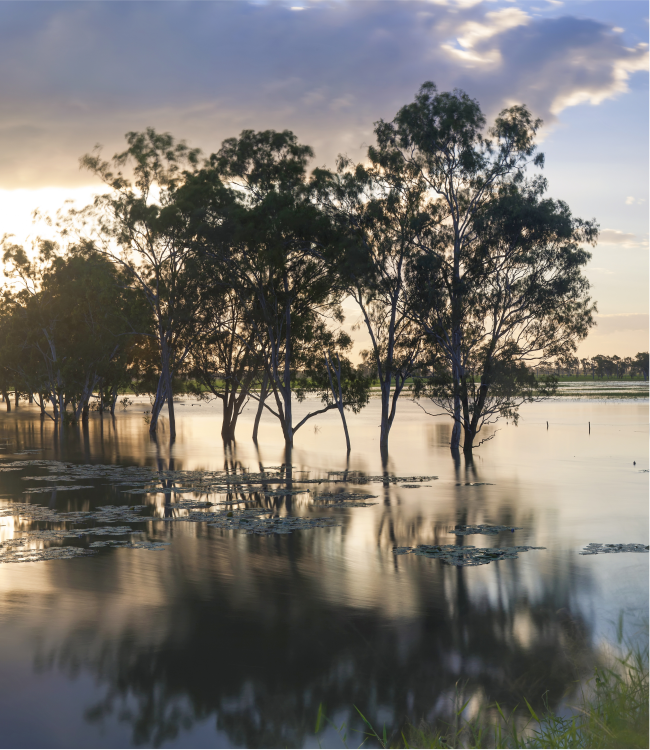
Flood season in Queensland runs from November to April, coinciding with the state’s annual cyclone season. During this period, heavy rainfall, monsoonal troughs, and cyclonic systems can create significant and widespread flooding – impacting communities, emergency services, public infrastructure, local economies, and council operations.
But while this is the peak period, flooding in Queensland is no longer a seasonal issue. From the devastating 2011 Brisbane floods to more recent impacts like the March–May 2025 flood event in Western Queensland, councils across the state know too well that floods can occur at any time of year – often with little warning and enormous operational consequences.
As we step into another high-risk season, councils are once again preparing their Emergency Management teams, reviewing plans, checking systems, and ensuring their organisation is ready to respond. The question is no longer if a major event will occur – it’s whether councils have the right capability, systems, and support in place to respond effectively when it does.
This blog explores:
- The realities of Queensland’s flood season
- What councils need to consider right now
- Where the biggest risks often sit
- How CT Management Group has supported councils before
- What a best-practice recovery model looks like
- Practical preparedness actions for QLD councils ahead of the season
Why Emergency Management Capability Matters More Than Ever
During a flood event, councils must rapidly respond across multiple streams, including:
- Emergency coordination
- Road closures and transport management
- Community information and welfare
- Asset assessment and safety inspections
- Environmental health
- Waste management
- Stormwater and drainage management
- Recovery centre activation
- Funding and reporting compliance
- Infrastructure repair and reconstruction
These responsibilities become even more complex when:
- existing staff capacity is limited
- specialist technical skills are required
- the organisation is already under pressure
- urgent grant submissions must be lodged
- the damage is widespread across multiple towns
Many councils struggle with the scale of events, not because they lack capability, but because they lack capacity – the number of people, hours, and specialist skills required to meet the demands.
This is where councils often turn to CT Management Group.
A Proven Model: How CT Management Group Supported Moira Shire Council Through One of Victoria’s Worst Floods
While Queensland has its own flood characteristics, the lessons from Moira Shire Council’s recovery remain directly relevant. The flood impacts are similar: large rural footprint, widespread damage, time pressure, community expectation, limited resourcing, and high governance requirements.
The Moira Shire Flood Recovery – A Snapshot
- $40 million infrastructure recovery project
- Delivered ahead of schedule
- 3,500 defects logged and tracked using DELTA-S
- Stand-alone Flood Recovery Office established
- Transparent governance and community communication
- New contractor performance model introduced

The Challenge
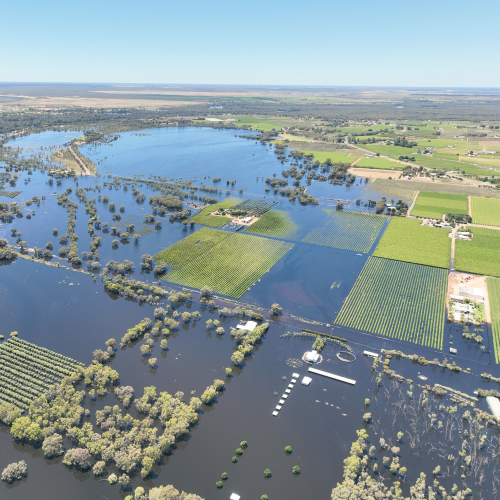
Moira Shire Council was hit by record floods in 2012, affecting over 80% of its 4,000 km² region. More than 1,000 properties, 1,400 km of roads, bridges, drains, and buildings suffered extensive damage.
Council faced:
- Enormous pressure to restore infrastructure quickly
- Limited internal staff capacity (just 200 FTE)
- Incomplete early damage data
- Strict compliance and funding conditions
- High community expectations
- A need for transparent, accountable processes

CT Management Group’s Solution
We designed and implemented a complete end-to-end Recovery Management Framework, including:
- A dedicated Flood Recovery Office
- A specialist Recovery Team of engineers, project managers, and inspectors
- DELTA-S defect and asset system for real-time tracking
- A new schedule-of-rates contractor model
- Integrated reporting to meet funding requirements
- A community-centred contact hub

The Outcome
- All infrastructure restoration delivered ahead of the funding deadline
- Full transparency and compliance
- Over 3,500 projects tracked accurately
- A model that restored community confidence
- Recognised by other councils as best practice
- One of Victoria’s most successful flood recoveries
What Queensland Councils Should Be Thinking About Right Now
Flood season is here, and councils across the state are already reviewing their preparedness. Based on decades of experience in disaster management and recovery, CT Management Group recommends that councils consider the following priority areas:
Assess Organisational Capacity – Not Just Capability
Ask:
- Do we have enough internal staff to manage both the emergency and day-to-day operations?
- Do we have the specialist skills required for major infrastructure damage assessments?
- Do we have backfill capacity if key people are unavailable?
Events rarely occur at convenient times, and councils often underestimate the staffing load required.
Review Your Emergency Management Plan and Recovery Framework
Ensure your plans reflect:
- Updated risk mapping
- Clear roles and responsibilities
- Scalable workforce structures
- Activation triggers
- Communication pathways
- Multi-agency coordination
- Funding and compliance requirements
Many councils discover gaps only when the event hits.
Confirm Your Contractor and Procurement Pathways
Are your panel contracts current?
Do you have:
- compliant procurement models?
- schedule-of-rates contractors?
- a clear escalation model?
Moira’s success was built on contractor readiness and governance clarity.
Ensure Your Damage Assessment and Data Capture Systems Are Ready
Data is the backbone of funding, reporting, and transparent recovery.
Consider:
- Do you have a defect logging system like DELTA-S?
- Can you track and validate all works?
- Can you provide evidence for reimbursement?
Without robust systems, councils risk delays, scope creep, and financial exposure.
Strengthen Community Engagement and Communication Protocols
Community expectations during floods are high.
Councils should ensure:
- Communication plans are ready
- Channels are active and consistent
- Flood Recovery Centres are pre-planned
- A clear contact hub is in place
Moira’s standalone Recovery Office was instrumental in restoring trust.
Identify External Partners Before You Need Them
The worst time to find support is during the crisis.
Councils should pre-identify partners with:
- Proven disaster recovery experience
- Local government expertise
- On-the-ground capacity
- Asset management capability
- Project management experience
- Governance and compliance knowledge
- Integrated data systems
CT Management Group’s model is designed precisely for these situations.
How CT Management Group Can Support Queensland Councils This Flood Season
CT Management Group delivers a fully integrated Emergency Management Service, tailored to the unique pressures local governments face before, during, and after flood events.
Our approach includes:
- Emergency activation support
- Disaster recovery management
- Project leadership and governance
- Damage assessment and defect logging
- Contractor management
- Transparent reporting and funding compliance
- On-site and remote resourcing
- Community engagement frameworks
- Business continuity support
We understand the pressures local governments face – because we’ve delivered this work successfully under real, complex, time-critical conditions.
The Moira project is only one example.
Practical Steps Queensland Councils Can Take Now
Here is a recommended checklist for QLD councils heading into the November–April season:

Immediate Priorities
- Review your flood plan and ensure it’s current
- Confirm staffing contingencies and surge capacity
- Finalise contractor and procurement pathways
- Ensure communication protocols are activated and consistent
- Test your damage assessment and asset logging system
- Identify internal and external roles early
Short-Term Preparedness
- Scenario test your recovery framework
- Confirm your funding reporting requirements
- Ensure your data systems can handle rapid input
- Brief council leadership on risks and readiness
- Activate your Emergency Management Committee
During the Event
- Maintain transparent communication
- Capture evidence early
- Deploy trained assessors
- Keep recovery governance tight
- Document decisions clearly
After the Event
- Activate your recovery office structure
- Implement parallel workstreams
- Provide transparent community updates
- Ensure compliance for grant reimbursement
- Conduct a lessons-learned review
Final Word: Flood Season Requires Preparedness and Capability
As Queensland prepares for another potentially challenging season, councils need more than plans – they need capacity, system strength, and a proven partner who understands the complexities of disaster recovery in local government.
CT Management Group has delivered large-scale flood recovery, helped rebuild communities, and established governance models that withstand scrutiny from Treasury, Audit, Council, and community stakeholders.
We’ve done it before.
We’re ready to support again.
And we’re available when councils need us most.
Explore the full Moira Shire Flood Recovery Case Study
Read the case study: Emergency Management Services – Moira Shire Council Flood Recovery – Leading Victoria’s First Dedicated Flood Recovery Office
Explore our Emergency Management Services: Emergency Management Services