

How Leading Councils Deliver Better Community Events
Creating more connected experiences before, during and after every community interaction
Community events play an important role in how councils connect with the people and communities they serve.
From festivals, library programs and community celebrations to information sessions, workshops, consultations and civic events, each interaction creates an opportunity to strengthen community participation and build relationships.
But behind what may appear to be a relatively simple event can sit a surprisingly complex collection of processes. Registrations may be captured in one system. Confirmation emails are sent from another. Attendance is recorded manually. Feedback sits somewhere else. Staff spend time transferring information between platforms, managing spreadsheets and sending repetitive communications. And once the event is over, valuable information about the people who participated – what they were interested in, what they told Council and how they might want to engage in the future, can easily be lost.
For councils looking to deliver better community experiences, the opportunity is therefore much bigger than improving event registration.It is about creating a more connected journey before, during and after every event.
Start with the community journey
One of the most useful ways to think about an event is from the perspective of the person attending it.
How easy is it to discover the event?
Can they quickly understand whether it is relevant to them?
Is registration straightforward?
Do they receive the information they need before attending?
What happens when they arrive?
Can they easily provide feedback afterwards?
And importantly, does their engagement with Council continue once the event is over?
Looking at the entire journey helps shift the focus from managing individual event tasks to creating a connected community experience.
A well-designed journey might connect event promotion, registration, confirmation, reminders, attendance, feedback and follow-up rather than treating each as an independent activity.
For the community, the experience becomes simpler. For Council, the information becomes considerably more valuable.

Reduce the administration behind the experience
Better community experiences should not require more administration.
Yet many event processes still rely heavily on manual activities – spreadsheets, duplicated data entry, separate mailing lists, individual emails and information being handed between teams and systems.
This creates additional workload and increases the risk of information becoming duplicated, outdated or disconnected.
Automation can help remove many of these repetitive tasks.
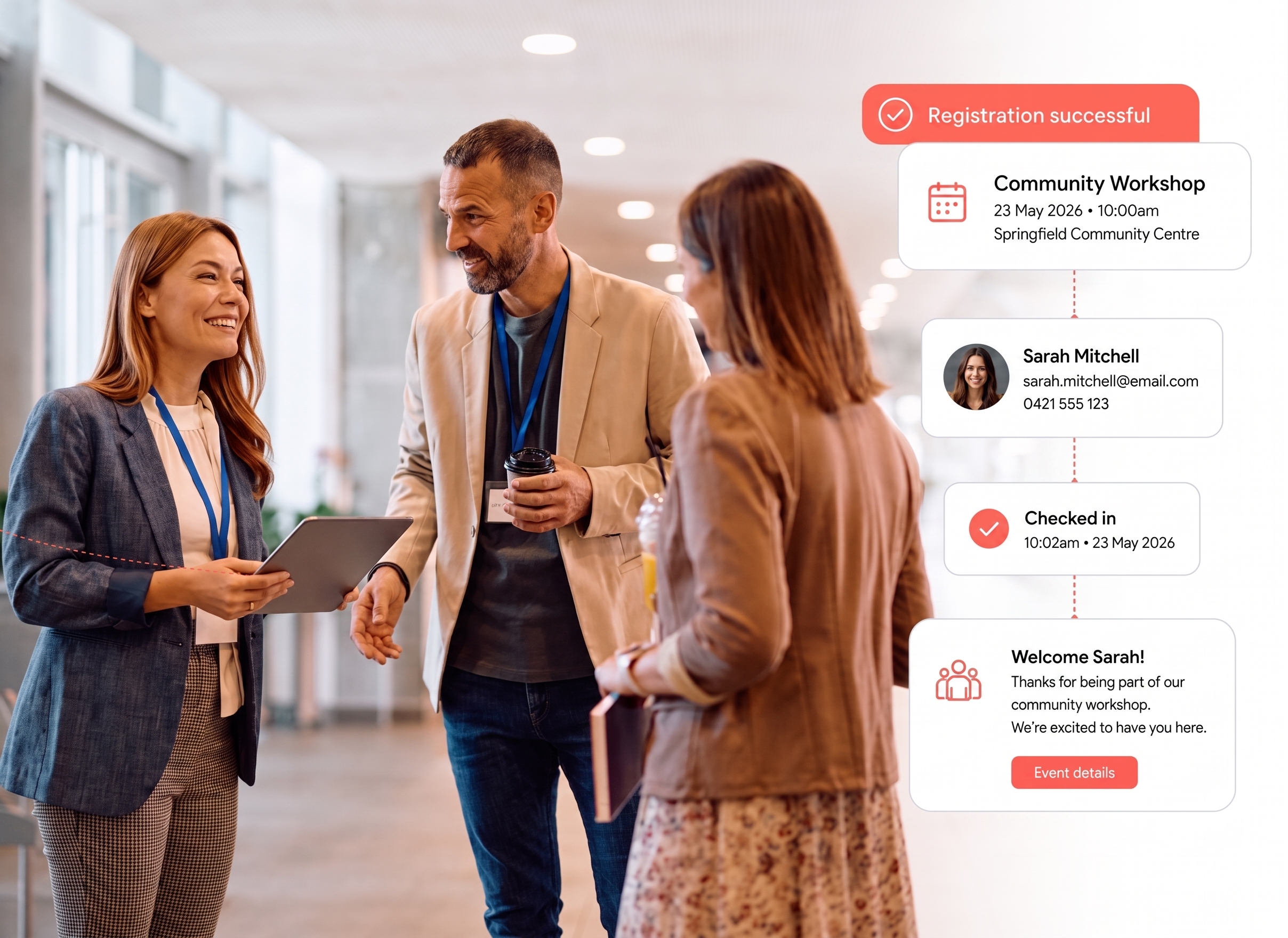
Registration can trigger an immediate confirmation. Relevant information can be sent automatically before an event. Reminders can be scheduled based on attendance requirements. Following the event, participants can receive tailored communications or feedback requests. The objective is not automation for its own sake. It is to remove unnecessary administration so council teams can spend more time on the work that requires people – engaging with communities, delivering quality experiences and responding to local needs.

Connect information across the event lifecycle
Events can also generate valuable community insight.
Registration information tells Council who is interested.
Attendance tells Council who participated.
Feedback provides insight into people’s experiences and expectations.
Future registrations begin to reveal patterns in interests and participation.
When that information remains fragmented across different systems, however, it becomes difficult to develop a meaningful picture of community engagement over time. A more connected approach allows councils to start viewing an event as one part of a longer relationship. For example, someone who attends a local sustainability workshop may also be interested in future environmental consultations. A family attending a community festival may want information about other local programs. A participant in a business event may benefit from future economic development initiatives.
Used appropriately and with the right privacy and consent frameworks in place, connected information can help councils deliver communications and opportunities that are increasingly relevant to their communities.
Think beyond attendance numbers
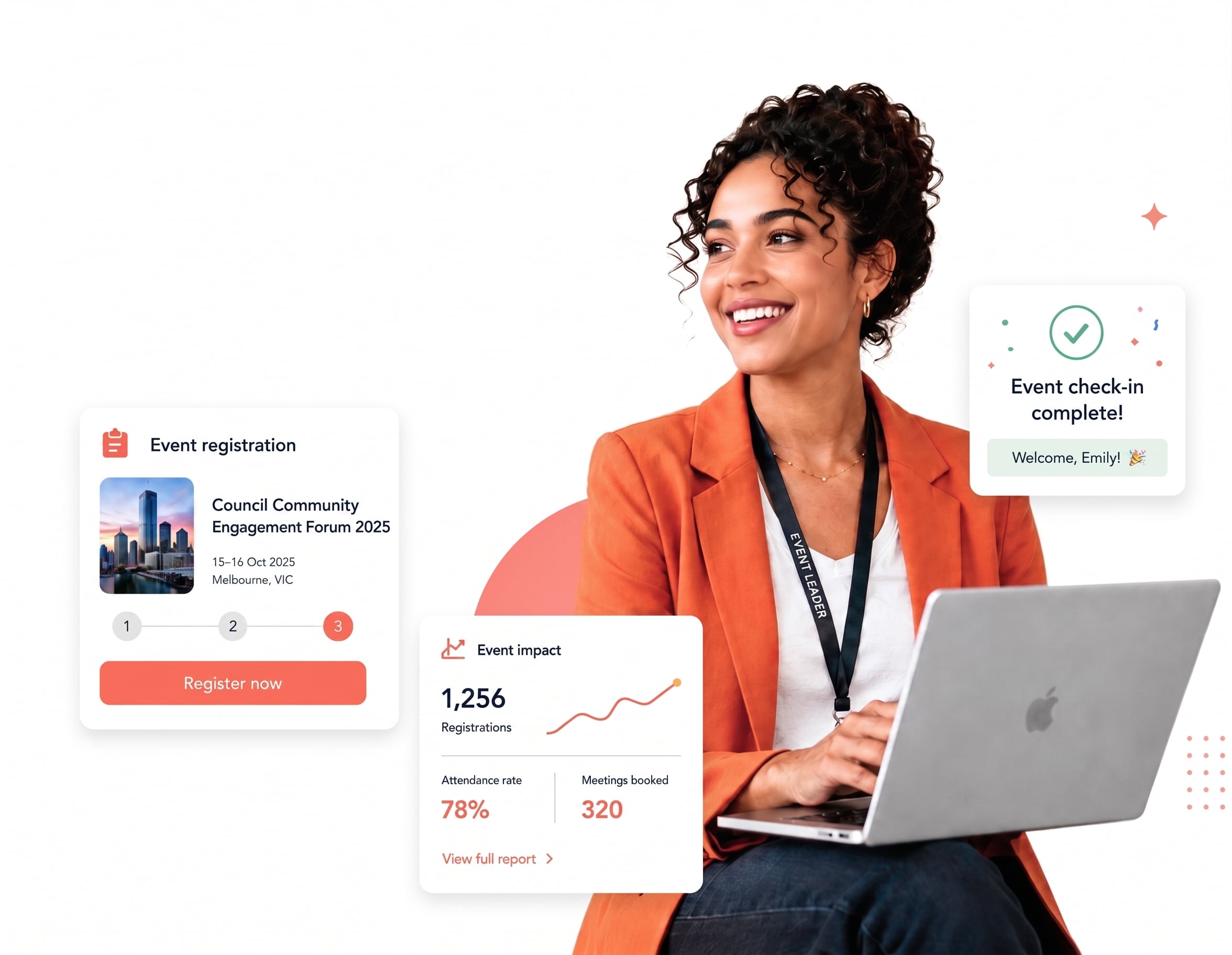
Event success has traditionally been measured through relatively straightforward measures such as registrations and attendance.
Those measures remain important, but digital tools provide an opportunity to understand considerably more. Councils can consider questions such as:
- Where did registrations originate?
- Which communications generated the strongest response?
- What proportion of registered participants attended?
- Which topics or activities attracted the greatest interest?
- What feedback did participants provide?
- Are particular groups engaging repeatedly?
- What opportunities exist to continue the conversation?
This moves event reporting beyond “How many people came?” towards a much more valuable question “What did we learn about our community, and how can that help us engage better next time?”
Build engagement beyond the event
Perhaps the greatest opportunity sits after an event has finished.
Every registration, attendance and piece of feedback represents a community interaction. Rather than allowing those interactions to become isolated moments, councils can consider how appropriate follow-up can strengthen future engagement. That might mean inviting someone to a related event, sharing information relevant to their interests, seeking feedback, providing the outcome of a consultation or making people aware of another opportunity to participate.
Over time, this can help create a more connected understanding of how communities interact with Council.
The event therefore becomes more than a single activity. It becomes another point in an ongoing relationship between Council and community.
Technology should support the experience - not define it
There is no single technology solution that will address every council’s requirements.
The starting point should always be the desired community experience, organisational objectives and existing technology environment. Only then should councils consider how platforms, CRM technology, automation, websites, data and integrations can support that journey. This is particularly important in local government, where technology needs to work within established governance, privacy, accessibility, procurement and operational requirements.
The strongest digital solutions are therefore not simply technically capable. They are designed around the organisation, its people and the communities it serves.

Free Webinar: How Leading Councils Deliver Better Community Events
CT Management Group, together with our Strategic Alliance Partner Lightbox Agency, is hosting a free practical webinar exploring how councils can create more connected event experiences while reducing the administration behind them.
How Leading Councils Deliver Better Community Events
Thursday, 8th October 2026
11:00 am – 12:00 pm
Live Online Webinar
During the session, we will explore practical approaches to:
- Create a seamless event journey before, during and after an event.
- Simplify registrations and communications.
- Reduce manual data entry and disconnected processes.
- Automate confirmations, reminders and follow-up.
- Capture attendance, feedback and community preferences.
- Better connect people with future events, consultations and engagement opportunities.
- Build a clearer picture of community engagement over time.
Lightbox Agency will also provide a practical demonstration using HubSpot to show how CRM, automation, communications and data can be brought together to support a more connected event experience.
Free Council Event Toolkit
Everyone who registers will also receive our downloadable Event Toolkit, providing practical resources and checklists that council teams can use when planning and delivering community events.
Can’t attend live? Register anyway and we’ll send you access to the webinar recording and toolkit following the session.
REGISTER FOR THE FREE WEBINAR
Ready to Create a More Connected Digital Experience?
Whether you’re looking to improve your website, strengthen community engagement, streamline communications or better connect your CRM, data and digital platforms, CT Management Group and our Strategic Alliance Partner Lightbox Agency can help. We work with organisations to understand what’s getting in the way, identify opportunities for improvement and create practical digital experiences that make it easier to connect with the people and communities you serve.
Have a digital challenge or idea you’d like to explore? We’d love to hear about it.
About CT Management Group and Lightbox Agency

CT Management Group works with councils and public-sector organisations across Australia to strengthen organisations and the communities they serve.
Lightbox Agency is a CT Management Group Strategic Alliance Partner specialising in brand, digital and HubSpot solutions. Together, our organisations bring complementary local government, strategic, digital and technology expertise to help organisations create more connected and effective experiences for their communities.